
Health for Africans.
In Africa, there are around 3,000 different ethnic groups, speaking approximately 5,000 languages, making it multicultural and preserving its traditions from thousands of years of history and civilizations.
Health for Africans includes biological, emotional, and spiritual balance; it involves harmony within oneself, with others, with nature, with ancestors, and with the Universe.
Traditional African medicine specialists have dealt with health using their knowledge of the environment, plants, herbs, barks, roots, and animals; classifying diseases, determining the cause of the imbalance and disharmony—whether physical, emotional, with others, or with ancestors—and restoring order comprehensively, as the cure affects the individual, their community, the environment, and the Universe.
Africans highly value ancient knowledge. Respect for their knowledge is a way of collaborating, complementing healthcare centres and nearby hospitals to take care of their health, strengthen their immune system, improve hygiene against infectious diseases, and enhance their energy levels.
Informational Maps
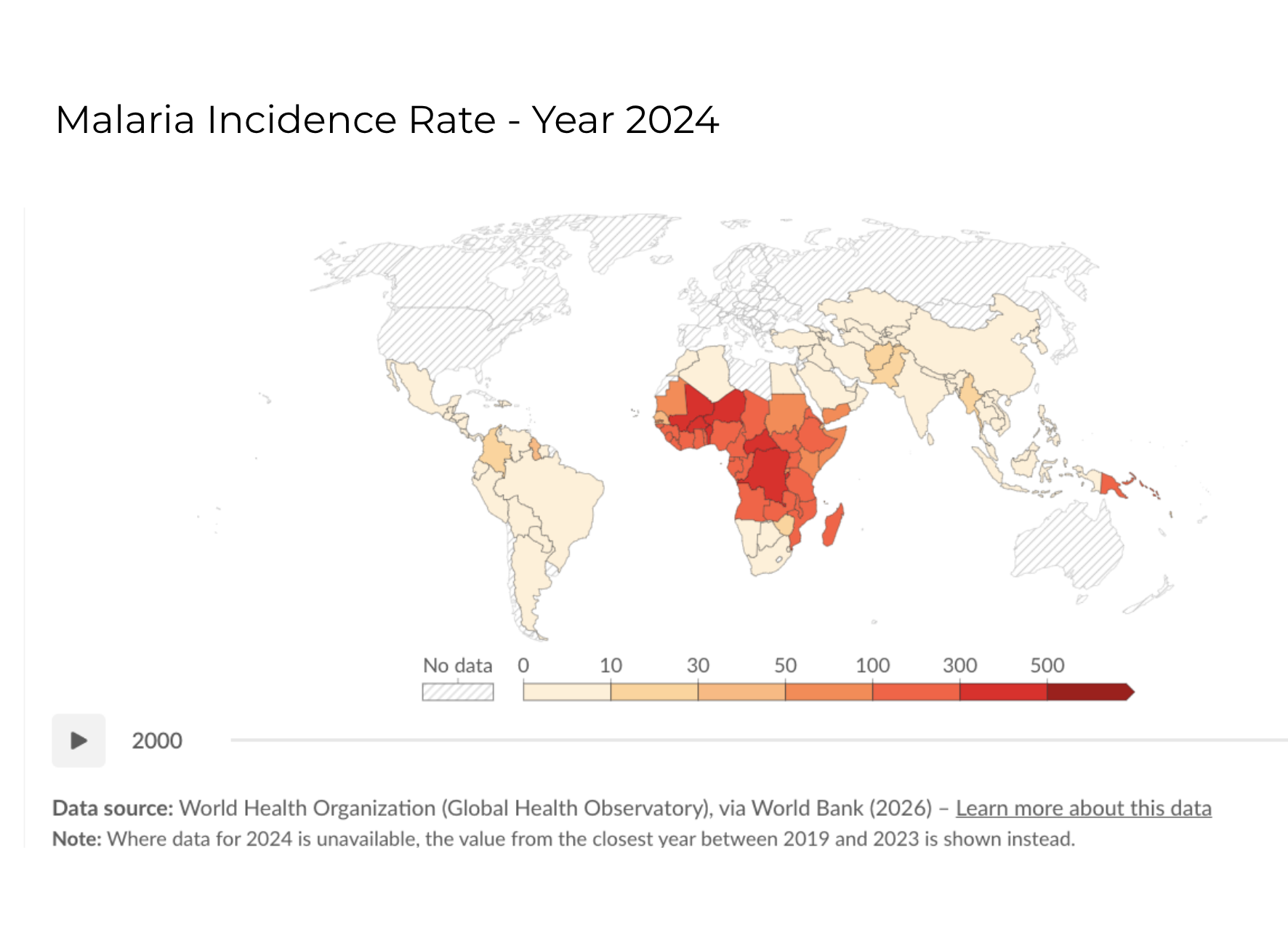
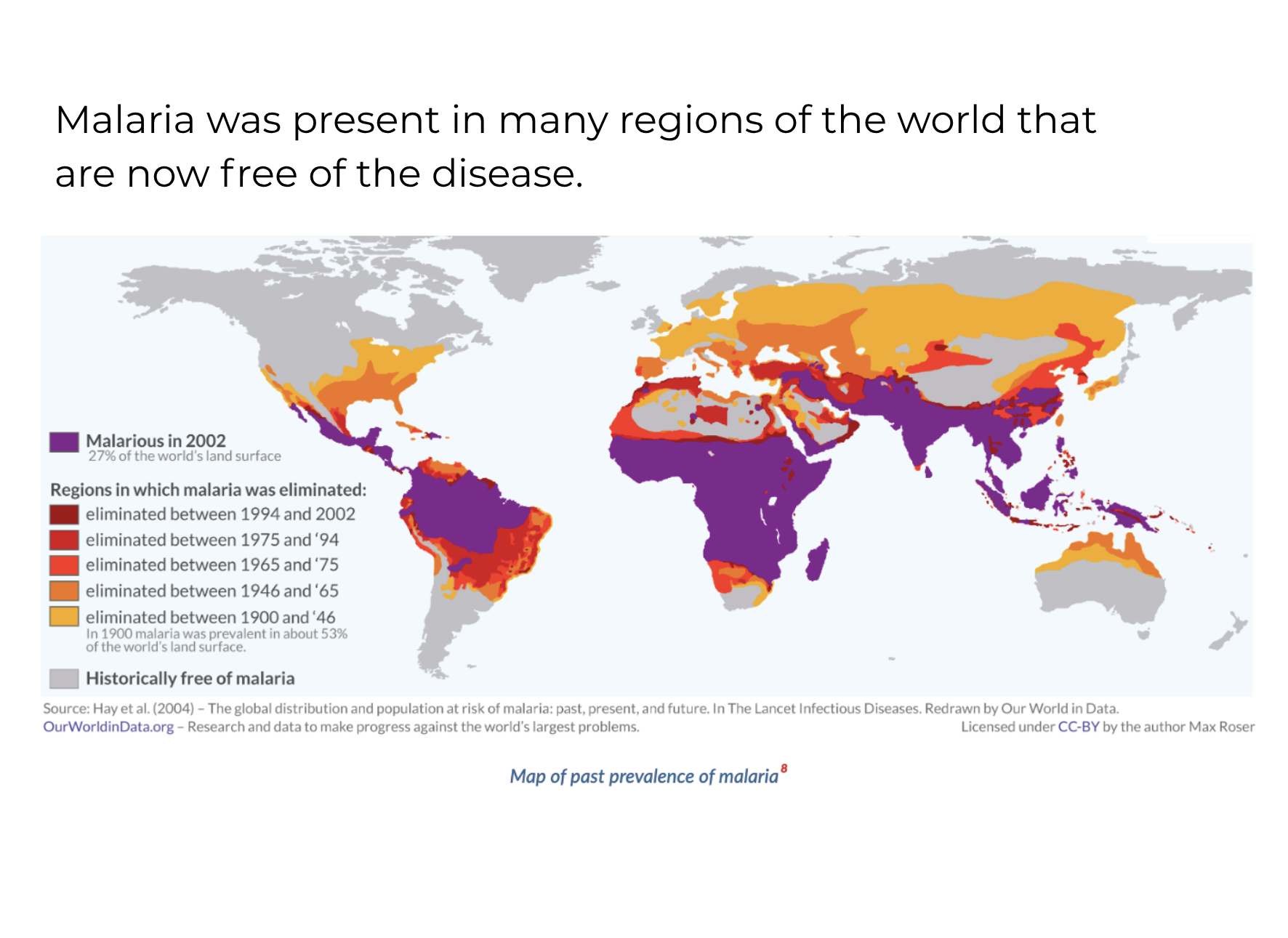
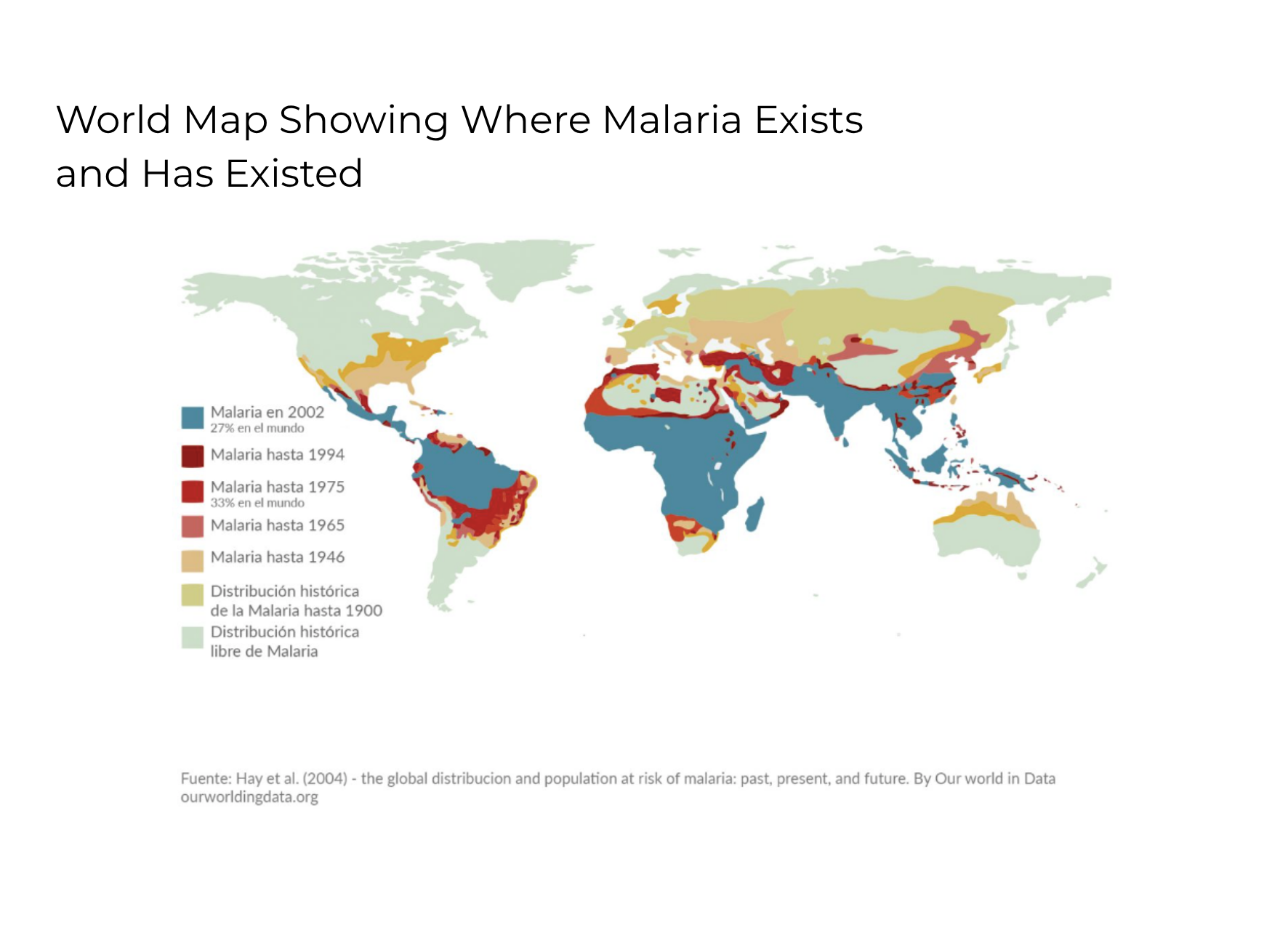
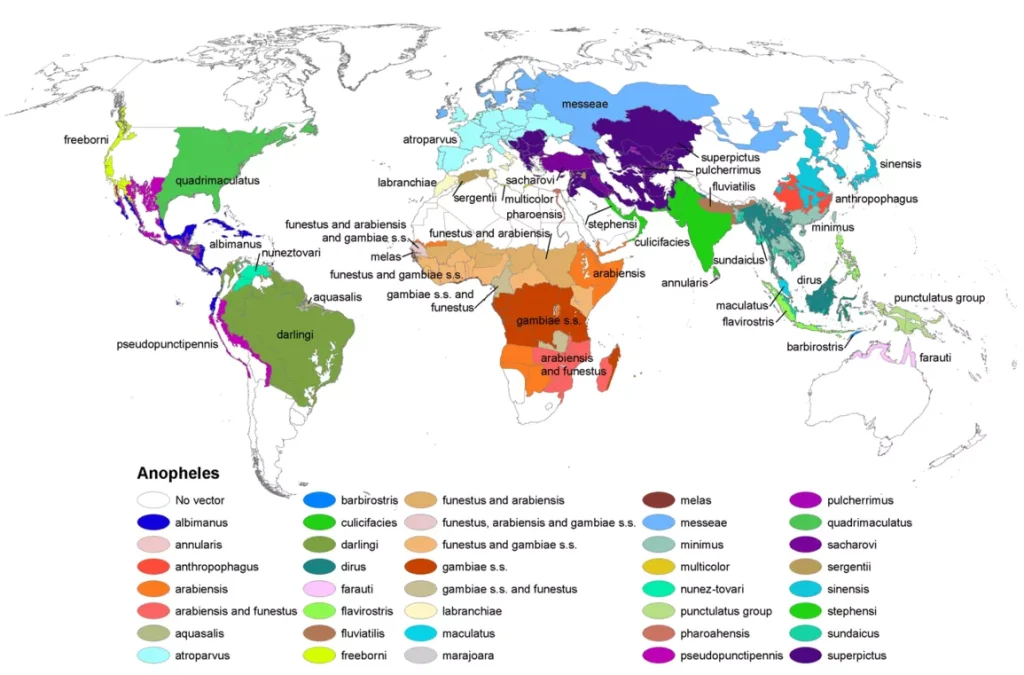
Climate Change and Malaria
Glacial periods alternate with interglacial periods, which have warmer climates. We are currently in an interglacial period. The global mean surface temperature (GMST) has increased tenfold since the last century.
How does climate change affect Malaria?
Animals and plants modify their physiology through genetic mutations and behavioral changes to adapt to new environmental conditions. The Anopheles mosquito is highly adaptable. An increase in temperature, within optimal ranges of 18°C to 32°C, humidity, and rainfall directly affects the mosquito.
- Enhances their reproductive capacity.
- Lays eggs in water more rapidly.
- Improves their growth phase.
- Faster formation of infectious spores.
- Speeds up the digestive process after biting.
- Increases biting frequency.
- Alters biting times.
- Selects other regions to inhabit.
- Can expand their habitat over long distances.
- Access to populations with no immunity.
- Can interbreed, creating new species.
- Increases the formation of more breeding sites.
The temperature increase indirectly affects the parasite, which lives inside the mosquito, and its survival depends on transmission and evasion of host defenses, their immune system, and treatments.
- If the mosquito increases its transmission speed, the parasite will pass to more hosts.
- With more infected individuals, the chances of mutations increase, and the parasite will select the most favorable genes for survival.
- With populations lacking immunity, transmission, and mutations are intensified.